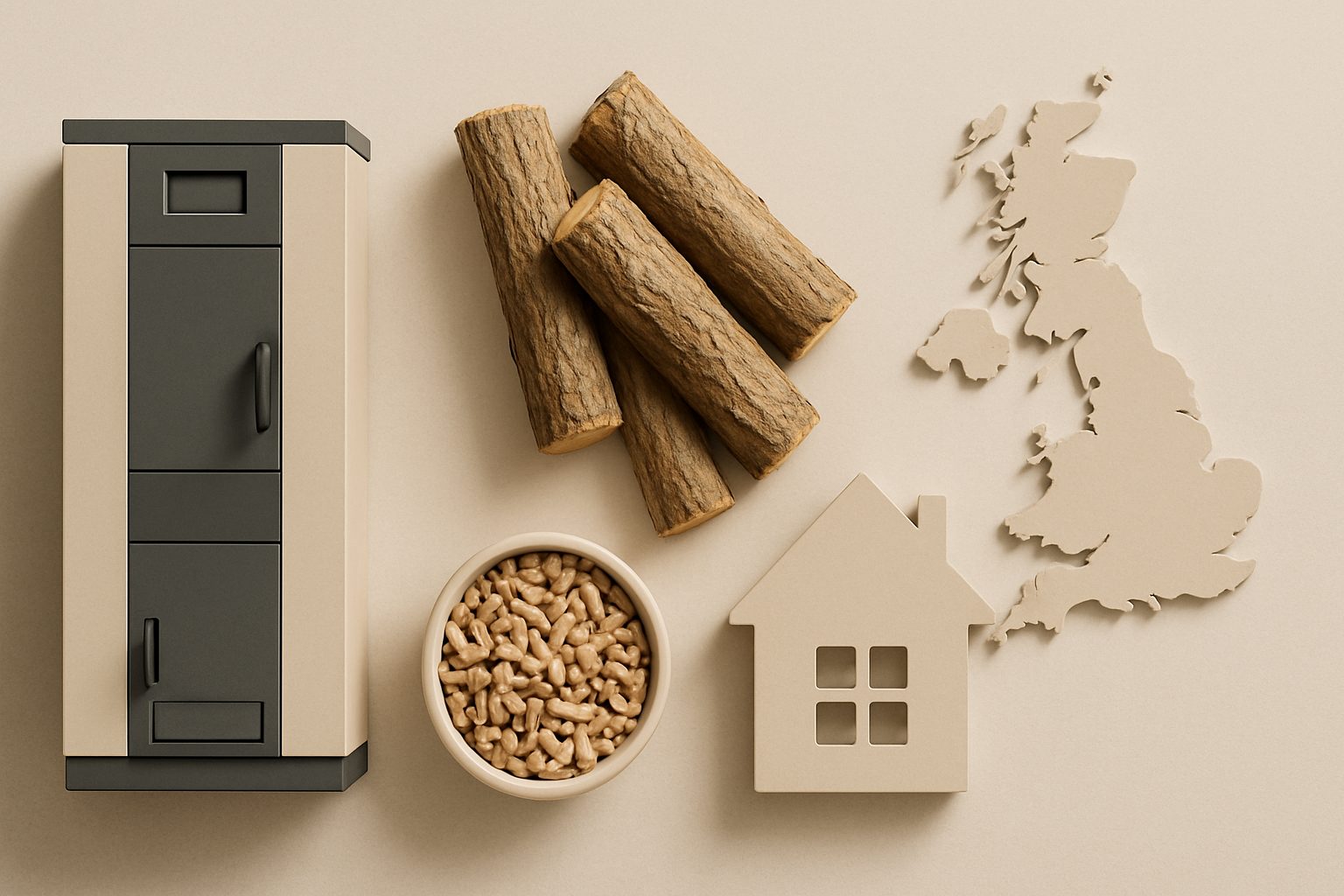
The Complete Guide to Off-Grid Wood Gasification for UK Rural Properties
Wood gasification offers a practical way to generate heat and, in some cases, electricity for remote rural properties that lack mains gas or where oil heating has become uneconomical. This guide covers everything UK property owners need to know before investing in a system, from technical principles and cost realities to planning regulations and ongoing maintenance.
What is Wood Gasification?
Wood gasification is a thermochemical process that converts solid wood into combustible gas by heating it in a low-oxygen environment. The resulting gas, called syngas, can power heating systems, boilers, or generators with far greater efficiency than burning wood directly in a stove or open fire.
The process reduces your fuel volume dramatically—a wood gasifier typically requires 30–40% less wood than a conventional wood-burning boiler to produce the same heat output. For isolated properties with difficult fuel delivery logistics, this efficiency saving translates directly to lower annual costs and less frequent refuelling.
How Wood Gasification Works
The core principle is straightforward but the execution requires proper equipment. Wood is fed into a gasification chamber where intense heat (800–1,200°C) breaks down the wood's molecular structure in a restricted oxygen environment. This incomplete combustion produces three main products: combustible gases (mainly carbon monoxide and hydrogen), charcoal, and water vapour.
The syngas flows through a cooling and cleaning system that removes tar, moisture, and particulates before it reaches a combustion chamber, where it ignites and releases heat. This heat is transferred to water circulating through your property's heating system, just like a conventional boiler.
The process is far more efficient than direct wood burning because:
- The gas contains concentrated energy that burns completely and controllably
- Multiple heat transfer stages capture warmth that would otherwise escape as smoke
- Combustion is more complete, extracting more joules from each kilogram of wood
Downdraft gasifiers (most common for domestic use) force air down through the burning zone, while updraft models draw air upward. Downdraft systems are more widely recommended for UK residential applications because they produce cleaner syngas with lower tar content.
Types of Wood Gasification Systems
Standalone Gasifiers with Thermal Storage
A wood gasifier connects to a large insulated water tank (thermal battery) that stores heat. Your heating system draws from this tank when needed, allowing the gasifier to run efficiently at consistent high temperature rather than cycling on and off. Tank sizes range from 500 to 3,000 litres depending on your heating demand and how often you want to refuel.
This setup suits properties where you can tolerate batch refuelling (perhaps twice weekly in winter) and have space for a substantial tank.
Gasifier-Boiler Combinations with Backup Heat
Some systems integrate a wood gasifier as a primary heat source with a conventional oil or electric boiler as backup. The boiler kicks in when gasifier output can't meet demand—useful during particularly cold snaps or if you run low on fuel. This hybrid approach reduces the size of thermal storage needed and offers more flexibility.
Gasifiers Powering Central Heating Systems
Modern systems integrate with your existing central heating pipework, meaning you can heat radiators, underfloor systems, or both. Some properties combine gasifier heating with heat pumps or solar thermal panels for year-round performance.
Cost Breakdown for UK Installations
Equipment Costs
A decent quality downdraft gasifier unit suitable for a UK residential property (heating 3–5 bedrooms, ~150–200m²) costs £6,000–£12,000 depending on fuel feed system (manual versus semi-automated) and build quality.
Thermal storage tanks add £1,500–£3,500. If you're integrating into an existing system rather than installing new pipework, expect lower installation costs. Building new central heating infrastructure drives costs up substantially.
Installation labour typically runs £3,000–£6,000 for a straightforward retrofit, longer if significant pipework is required. You'll also need chimney work: either modifying an existing chimney or installing a new flue, costing £800–£2,500 depending on your property.
Permits, inspections, and building regulation sign-off add £500–£1,500 depending on your local authority.
Total installed cost: £12,000–£25,000 for a system heating a typical 3–4 bedroom rural property.
Smaller systems or pre-existing boiler replacement setups may cost less. Larger properties or those requiring new heating infrastructure can easily exceed £30,000.
Fuel Costs
Wood costs vary by region and supplier. Kiln-dried logs (which you should use—never unseasoned wood) currently cost £100–£200 per tonne in the UK, though bulk purchasing from local suppliers or sourcing from forestry operations can reduce this to £80–£120 per tonne.
A property heated primarily by wood gasification uses approximately 8–12 tonnes annually, depending on insulation quality and how cold your winters are. Budget £1,000–£2,000 annually for fuel if purchasing at typical retail rates, or £650–£1,400 from bulk suppliers.
Mains oil heating for the same property currently costs roughly £1,500–£2,200 annually (prices fluctuate), so gasification offers modest fuel savings, usually 20–30% annually. The financial case strengthens if you have access to cheap wood or if you can source partially processed logs that you season yourself.
Running and Maintenance Costs
Gasifiers require regular maintenance to remain efficient. Annual servicing costs £300–£600 if performed by an engineer. DIY maintenance (ash removal, pipe cleaning, component inspection) is feasible if you're mechanically inclined, reducing annual spend to consumables only—perhaps £100–£200.
Replacement components (grates, heat exchangers, seals) typically last 5–8 years and cost £500–£1,500 per major component when needed.
Assessing Suitability for Your Property
Wood gasification works best for properties meeting most of these criteria:
Space: You need room for the gasifier unit itself (roughly 1m × 1m × 1.5m high), thermal storage tank (if used), and fuel storage. Fuel storage should hold 10–12 tonnes of logs, requiring approximately 20–25m³ of covered, ventilated space.
Insulation: Properties with poor insulation require vastly more fuel. If your heating bills are extremely high, invest in insulation first—it typically offers better ROI than a new heating system.
Regular occupancy: Gasifiers perform best when heating demand is consistent. Holiday homes or properties occupied intermittently often struggle to justify the capital cost.
Access: You need reliable access for delivery of bulk logs. Remote properties with difficult access should confirm suppliers are willing to deliver before committing.
Fuel availability: Ideally, sourcing wood within 30–50 miles keeps transport costs reasonable. Check local forestry contractors, sawmills, and firewood suppliers before proceeding.
Existing heating: Properties with functional central heating plumbing can integrate a gasifier more cheaply than those requiring complete system overhaul.
Planning Permission and Building Regulations
Wood gasification systems fall under Building Regulations Part L (conservation of fuel and power) and Part J (combustion appliances and fuel storage safety).
Planning Permission
Whether you need planning permission depends on your local authority and property type. Listed buildings almost always require consent. For standard rural properties, a wood gasifier qualifies as an installation incidental to residential use and typically does not need planning permission, but this varies—check with your local planning authority before purchasing equipment.
The chimney or flue may require permission depending on visibility and whether it requires planning due to height or prominence.
Building Regulations Approval
You must notify your local building control authority before installation. They'll inspect to confirm:
- Flue sizing and termination meet safety standards
- Fuel storage is appropriately distanced from buildings and boundaries
- System installation meets competence standards (BS 8303 for biomass systems)
- Electrical installation (if integrated with controls) is safe
- Thermal store insulation is adequate
Building control approval costs £300–£600 and usually requires one inspection during installation and a final completion inspection.
Insurance and Declarations
Inform your buildings insurer of the new heating system. Most insurers accept wood gasifiers without premium increase, but some require additional declarations. Never install without updating your insurer—doing so could invalidate claims.
If you're planning to grant access to contractors, confirm your public liability insurance remains valid.
Sourcing Fuel: Wood Supply and Seasoning
The most critical factor in reliable gasification is consistent, quality fuel. Wood must be properly seasoned (dried) before use.
Moisture Content Matters
Freshly felled wood contains 50–60% moisture. Burning unseasoned wood wastes energy drying it, produces excessive tar and creosote buildup in pipes, reduces efficiency by 40–50%, and can cause system failures.
Properly seasoned firewood has 15–20% moisture content. Achieving this requires either:
- Kiln drying (commercial, 2–3 weeks): expensive but guarantees low moisture
- Air seasoning (6–12 months): stacking logs in covered, ventilated storage; the standard method for bulk fuel
Most UK gasifier users buy kiln-dried logs from suppliers, spending more per tonne but avoiding storage space requirements.
Local Sourcing Options
Forestry contractors: If you're near commercial woodland, contractors often sell off-cuts and low-grade timber cheaply. You may need to process it yourself.
Sawmills: Produce offcuts and waste wood suitable for gasification. Quality and pricing vary widely.
Firewood merchants: Typically sell kiln-dried hardwoods at premium prices but with guaranteed moisture content and consistent supply.
Forestry Commission and woodland trusts: Some sell harvested wood to local residents; contact your regional office for details.
On-property wood: If you have woodland, you can harvest and season your own, but this requires equipment (chainsaw, splitter) and space. Processing 10–12 tonnes annually is substantial work—factor in 50–100 hours annually.
Aim to purchase or source fuel in spring for autumn/winter use, allowing maximum seasoning time. Bulk purchasing (3–5 tonne loads) from single suppliers typically saves 15–25% versus retail firewood costs.
Installation Process
Planning and Design Phase
An engineer experienced with gasifier systems will survey your property, assess heating demand, recommend equipment sizing, and design the pipework layout. This phase takes 2–4 weeks and costs £500–£1,000.
Obtaining Approvals
Submit Building Regulations notification and allow 2–3 weeks for initial review. Some authorities request additional documentation; allow contingency time.
Physical Installation
The actual installation typically takes 5–7 working days for a straightforward system retrofit:
- Day 1–2: Remove old boiler (if replacing), position new gasifier and thermal store, run new pipework
- Day 3–4: Flue work, chimney connection
- Day 5–6: Electrical connections, control system setup, pressure testing
- Day 7: Final commissioning and handover
During installation, you'll be without heating. Schedule work during milder months if possible.
Commissioning and Testing
Once installed, the system undergoes pressure testing, flow rate verification, and combustion efficiency testing. This usually takes 1–2 days. Your installer should provide a detailed commissioning report and user manual.
Building Control Final Inspection
Allow 1–2 weeks from installation completion for final inspection and approval.
Running and Maintaining Your Gasifier
Daily and Weekly Tasks
- Ash removal: Ash accumulates in the gasifier bottom and heat exchanger. Remove ash 1–3 times weekly depending on fuel moisture and system load. Ash should be damp and compacted, not fine and fluffy (a sign of incomplete combustion).
- Fuel management: Keep thermal storage topped up by refuelling the gasifier according to your heating demand pattern. Most users refuel twice weekly in winter.
- Visual checks: Look for unusual sounds, smoke colour, or temperature fluctuations. The system should run quietly with minimal visible smoke.
Monthly Tasks
- Check all visible pipework for leaks or corrosion
- Verify thermal store temperature (should reach 60–80°C during operation)
- Inspect fuel storage for dampness or contamination
Annual Maintenance
- Full system inspection by qualified engineer: £300–£600
- Chimney sweep to remove creosote and ash deposits
- Replacement of worn seals and gaskets
- Testing of all safety controls
Component Life Expectancy
- Grates and combustion chamber parts: 5–8 years
- Heat exchanger: 8–15 years (depends on water quality and scaling)
- Thermal store insulation: 10–15 years
- Pipework and valves: 10–20 years with proper maintenance
- Flue and chimney: 15–25 years
Poor water quality (hard water or untreated mains supply) significantly reduces heat exchanger life. Consider installing a water softener or dosing with inhibitor chemicals (costs £150–£400 initially, then £50–£100 annually).
Efficiency and Performance
A well-maintained wood gasifier typically achieves 85–92% seasonal efficiency—the percentage of fuel energy that becomes useful heating. This compares favourably to conventional oil boilers (80–88% efficiency) but not to modern air-source heat pumps in mild climates.
Efficiency varies significantly based on:
- Fuel moisture content: Unseasoned wood can halve efficiency
- System load: Systems operating below 30% of rated capacity become less efficient; oversized systems for your property will underperform
- Installation quality: Poor insulation of pipes and thermal storage bleeds heat
- Maintenance: Ash and creosote buildup reduces heat transfer
- Water temperature: Running at unnecessarily high temperatures reduces efficiency
Real-world performance data from UK users shows seasonal efficiency of 75–85% in practice, accounting for all losses. This still compares reasonably with oil heating (70–80% in practice) but is notably worse than ground-source heat pumps (400%+ COP, i.e., 400 units of heat per unit of electricity) and comparable to air-source heat pumps in moderate climates.
Common Problems and Troubleshooting
Excessive Tar Buildup
Cause: Unseasoned wood, insufficient flue temperature, or extended periods at low load.
Fix: Switch to properly dried fuel, ensure flue maintains 250°C minimum (thermometer testing), and avoid prolonged low-load operation. Run full-power burns weekly to clear deposits.
Poor Combustion (Black Smoke, Smell)
Cause: Wrong fuel, ash accumulation, or air intake blockage.
Fix: Confirm fuel is kiln-dried to 15–20% moisture, remove ash, check that air vents are clear.
Insufficient Heat Output
Cause: Undersized system, poor insulation, or high fuel moisture.
Fix: Verify fuel moisture (use a moisture meter), inspect thermal store insulation, confirm the system is correctly sized for your property's actual heat demand.
Corrosion and Leaks
Cause: Aggressive flue gases mixing with condensation, especially during startup.
Fix: Ensure flue temperature stays above 250°C, inspect stainless steel components (they corrode slower), and consider upgrading to better-quality heat exchangers.
Gasification vs. Alternatives for UK Rural Properties
Wood Gasifier vs. Oil Boiler
Oil boilers are reliable, require no special fuel sourcing, and need minimal maintenance. However, oil prices have become volatile and tend upward. Gasifiers offer lower long-term fuel costs (often 20–30% savings annually) but demand more user engagement and higher capital investment.
If oil prices remain below £1,200 per tonne heated, oil boilers are cheaper in pure fuel terms. Above that, gasification becomes economically competitive.
Wood Gasifier vs. Air-Source Heat Pump
Air-source heat pumps are increasingly efficient and require no fuel storage or maintenance. However, they perform poorly when outdoor temperatures fall below –5°C (which limits COP) and struggle to heat large, poorly insulated rural properties cost-effectively.
An air-source heat pump with fossil fuel backup (usually the economic optimum for UK rural properties) costs £10,000–£15,000 installed and achieves 250–350% COP in moderate climates. Gasifiers offer more stable performance in very cold conditions and work well in properties with poor insulation, while heat pumps suit better-insulated homes or those in milder regions.
Wood Gasifier vs. Ground-Source Heat Pump
Ground-source heat pumps are extremely efficient (400%+ COP) but cost £25,000–£40,000 installed and require significant land disturbance for ground loops. They're economically superior to gasifiers in the long term but demand higher upfront capital and specialist installation.
For properties with difficult access or limited budgets, gasification remains more practical. For properties with spare capital and suitable land, ground-source heat pumps offer superior lifetime performance.
Next Steps if You're Seriously Considering Gasification
- Get a professional survey: A competent engineer can assess your property's suitability and recommend appropriate system sizing. Budget £400–£800 for this.
- Source local fuel suppliers: Before committing, confirm that reliable, reasonably priced wood is available locally. Contact 3–5 potential suppliers and ask about moisture content guarantees and pricing.
- Check planning and building regulations: Email your local planning authority and building control office with a photo and brief description of your property, asking about likely planning requirements.
- Request quotations from 2–3 installers: Get detailed quotes including equipment, installation, and any modifications to existing systems. Compare carefully—cheaper isn't always better for long-term reliability.
- Talk to existing users: If possible, visit a nearby property running wood gasification. Existing users often provide realistic perspectives on fuel sourcing, maintenance burden, and actual savings.
- Calculate payback period: Compare your current heating costs, fuel sourcing costs, and installation expenditure to establish a realistic payback timeline. For most UK properties, payback takes 10–15 years—a viable timeline if you plan to stay put, less attractive if you might sell within a decade.
Wood gasification offers genuine value for isolated UK rural properties with reliable fuel access, adequate space, and long-term commitment. It's not a quick financial win but a sensible long-term heating investment when alternatives (gas mains, oil, or heat pumps) are impractical or uneconomical.
More options
- Wood Gasifier Kits & Complete Systems (Amazon UK)
- Portable Generators (for gasifier pairing) (Amazon UK)
- Carbon Monoxide Detectors & Gas Safety Equipment (Amazon UK)
- Wood Moisture Meters & Fuel Prep Tools (Amazon UK)
- Gasifier Filters, Cyclones & Accessories (Amazon UK)